SC Connector
square, keyed and robustSC aligns a single fiber in a 2.5 mm ceramic ferrule and uses a keyed push-pull body that clicks into an adapter. Its larger shell is easy to handle and remains common in telecom and FTTx systems.
SC is mechanically simple, but optical compatibility still depends on fiber type, polish, wavelength and cleanliness.
Anatomy of the connector
Use the supplied plate to identify the connector, then check the four details below before selecting, terminating or mating it.
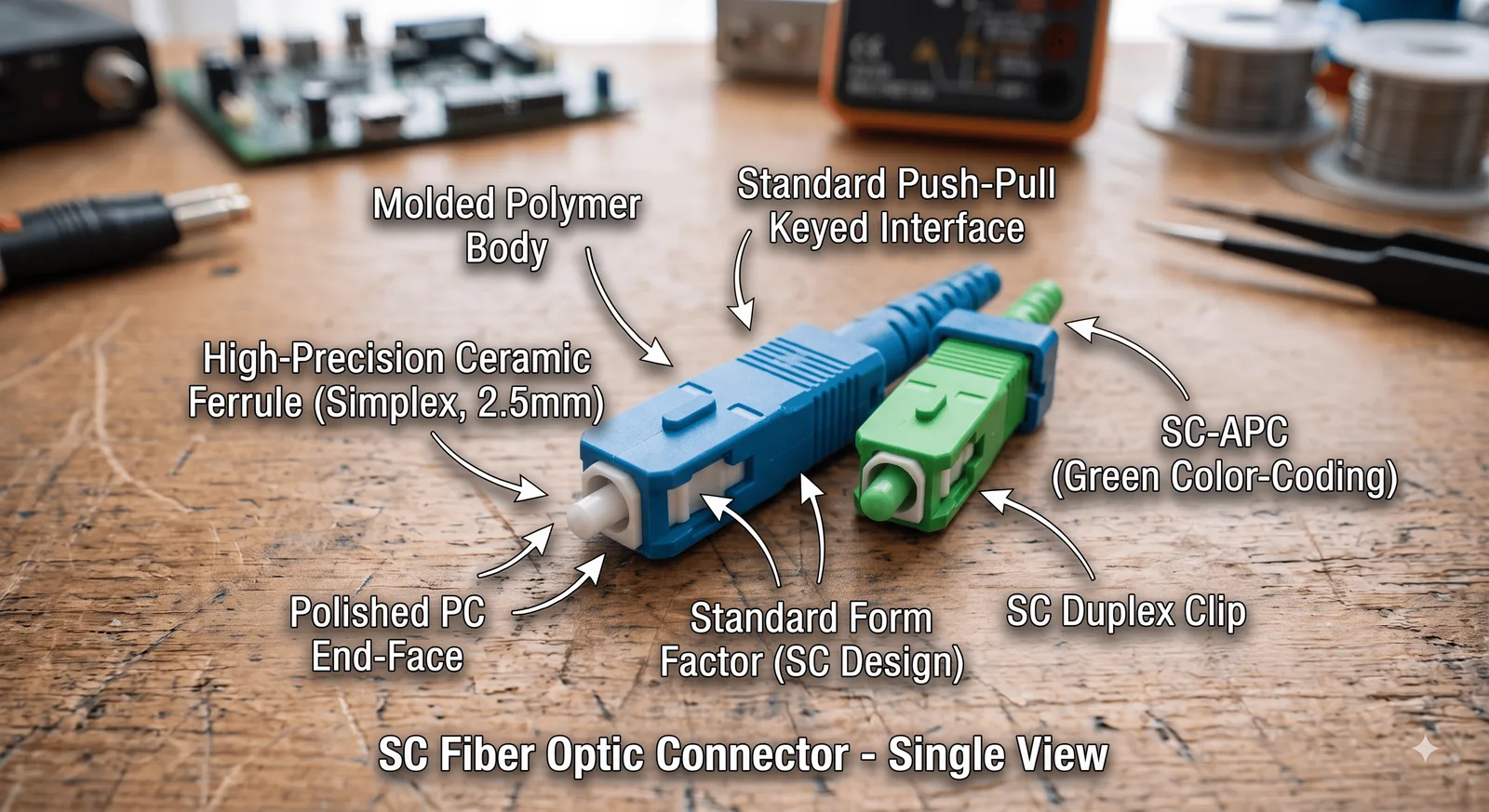
Four details to check before connection
The 2.5 mm ceramic ferrule holds and centres the polished glass fiber.
The square body controls rotation and prevents incorrect insertion.
The housing locks into the adapter and releases by pulling the body—not the cable.
The boot protects the fiber from tight bends at the rear of the connector.
Where it is used
The connector body is only one part of a link. Cable type, signal, impedance or optical polish must match the equipment on both ends.
SC/APC is common where low back-reflection matters in passive optical networks.
SC adapters appear in established single-mode and multimode patch fields.
The robust, easy-to-grip body suits distribution frames and field enclosures.
In cybersecurity & operations
The generous body is easy to handle, but the end face is still microscopic. A clean and controlled patch field prevents avoidable loss and service interruption.
Do not mate SC/UPC to SC/APC even though the outer connector family is the same.
Disconnect by gripping the connector, not the cable, to protect the fiber and latch.
Secure patch panels so unauthorized cross-connects and optical taps are visible.
Use a scope and approved cleaning tools before every mating.