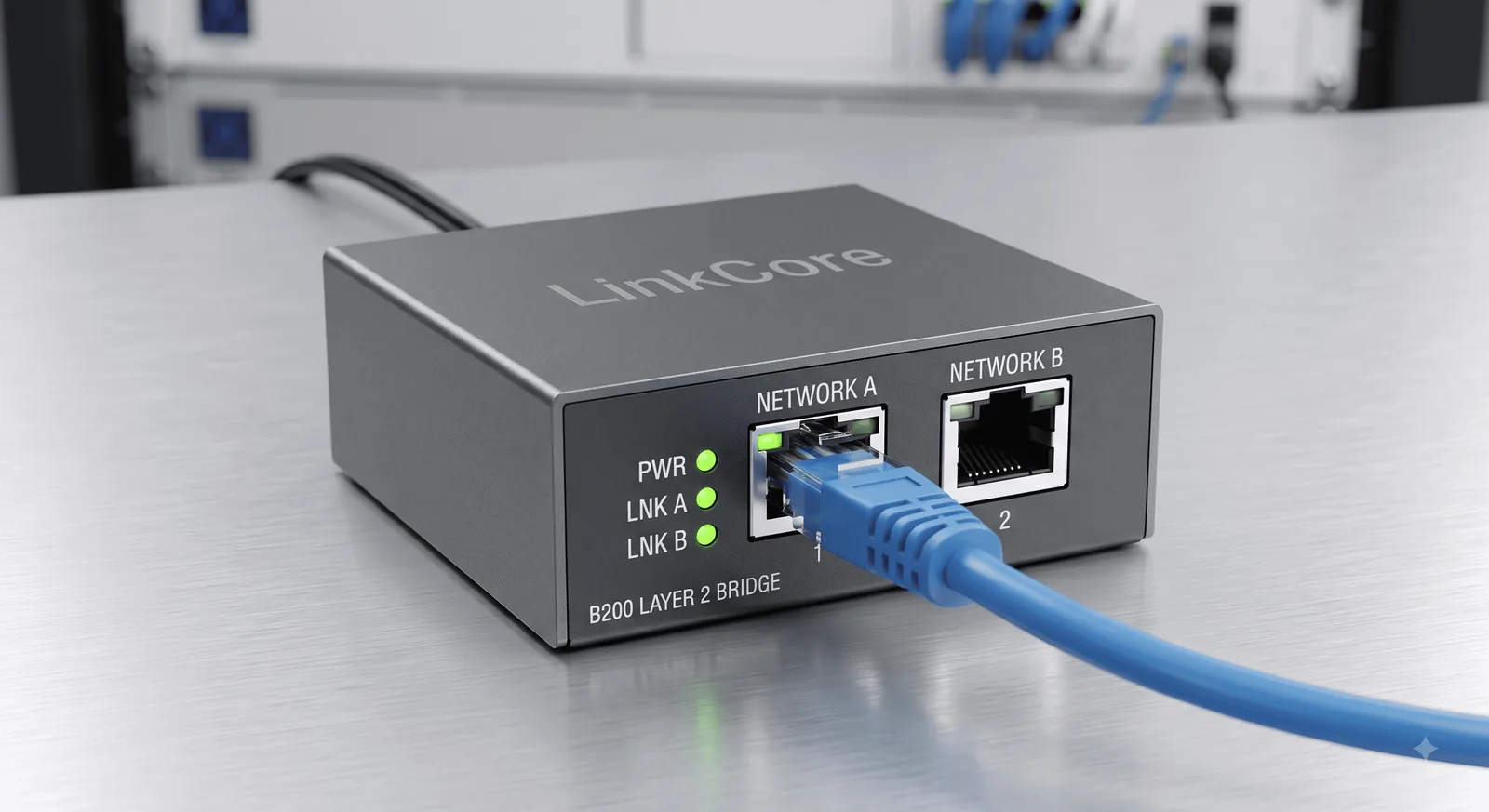
Bridge
the network bridgeA bridge joins two network segments into one. It reads the MAC address on each frame, learns which segment every host lives on, and only forwards frames that need to cross — the switch’s two-port ancestor.
A bridge connects two segments and forwards a frame across only when it has to.
How it works
forwards only across
The bridge learns which hosts sit on each side. Traffic staying on one segment it leaves alone; only frames crossing between A and B are forwarded — keeping each side quiet.
What a bridge does, step by step
It reads the source and destination MAC addresses.
It records which segment the sender is on.
It checks whether the destination is on the same segment or the other one.
Crossing traffic passes through; purely local traffic is dropped, keeping segments separate.
In cybersecurity
A bridge contains local traffic, giving a little isolation — but it trusts MAC addresses it can’t verify.
Keeps local frames off the far segment, reducing exposure.
A forged source address poisons the learned table.
Bridged loops need Spanning Tree or they storm the network.
No awareness of IP, ports or application data.
Isolates noisy or sensitive groups of hosts.
Multiport switches do this at scale today.