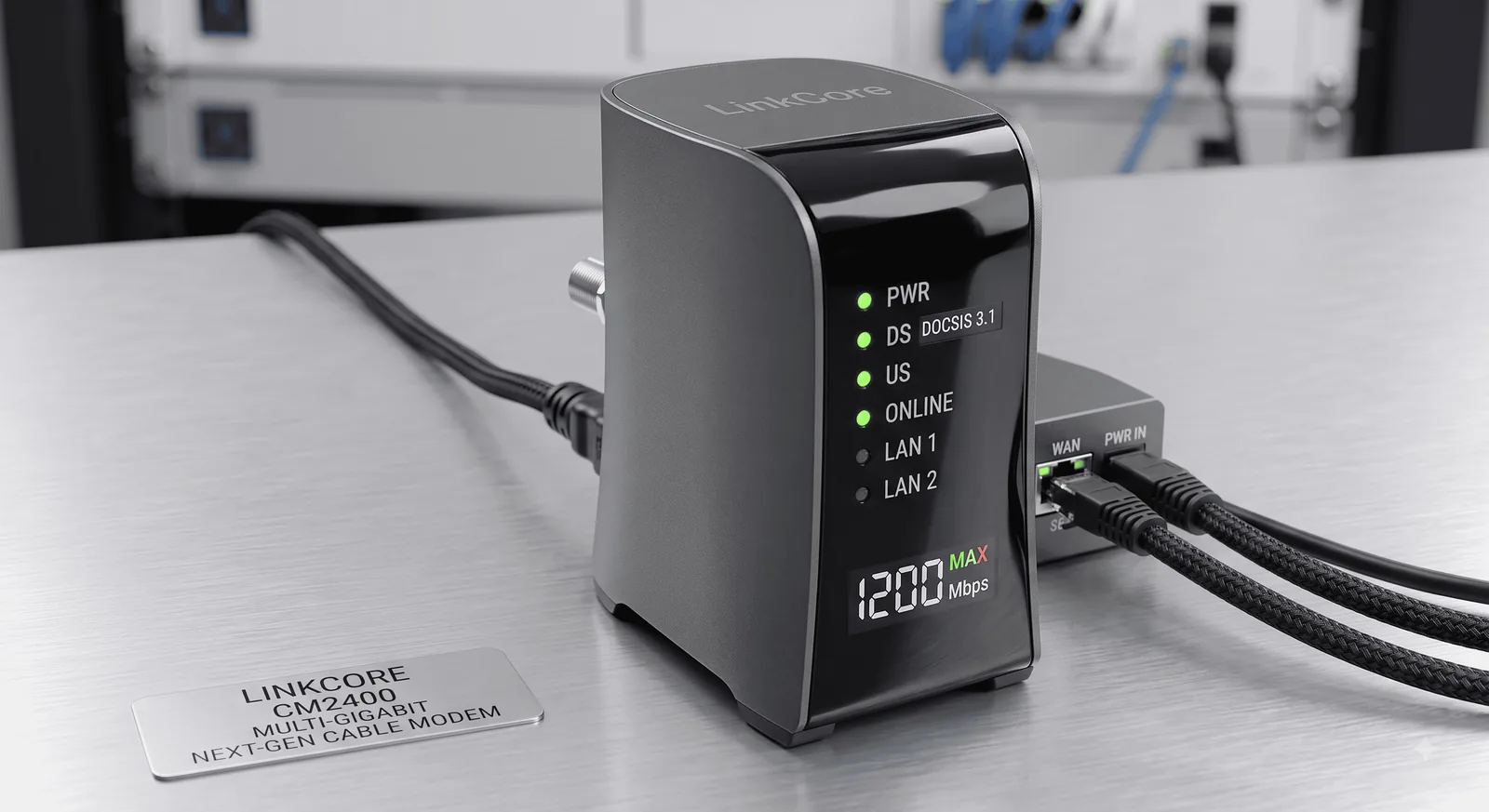
Modem
the modulator–demodulatorA modem converts digital data into a signal a phone, cable or fibre line can carry — and back again. It modulates outgoing bits onto the line, demodulates the incoming signal into bits, and connects your network to the ISP — the translator at the edge of the wire.
A modem turns digital data into a line signal and back, linking your network to the ISP.
How it works
demodulate
Your data is digital, but the line carries an analog or line-coded signal. The modem modulates outgoing bits onto it and demodulates the return — the bridge between your network and the ISP.
What a modem does, step by step
It receives bits from the router on the local side.
It encodes those bits as the signal the medium carries.
Incoming line signals are decoded back into bits.
The recovered data goes to the router, which forwards it to the LAN.
In cybersecurity
The modem is the physical entry point from the ISP, so it’s the first thing exposed to the outside.
It faces the public line directly, before any LAN protection.
Usually ISP-managed, but often neglected and vulnerable.
In bridge mode a firewall must sit directly behind it.
Change any local admin login it ships with.
Line taps happen at the point of entry.
Never expose the LAN raw to the modem.