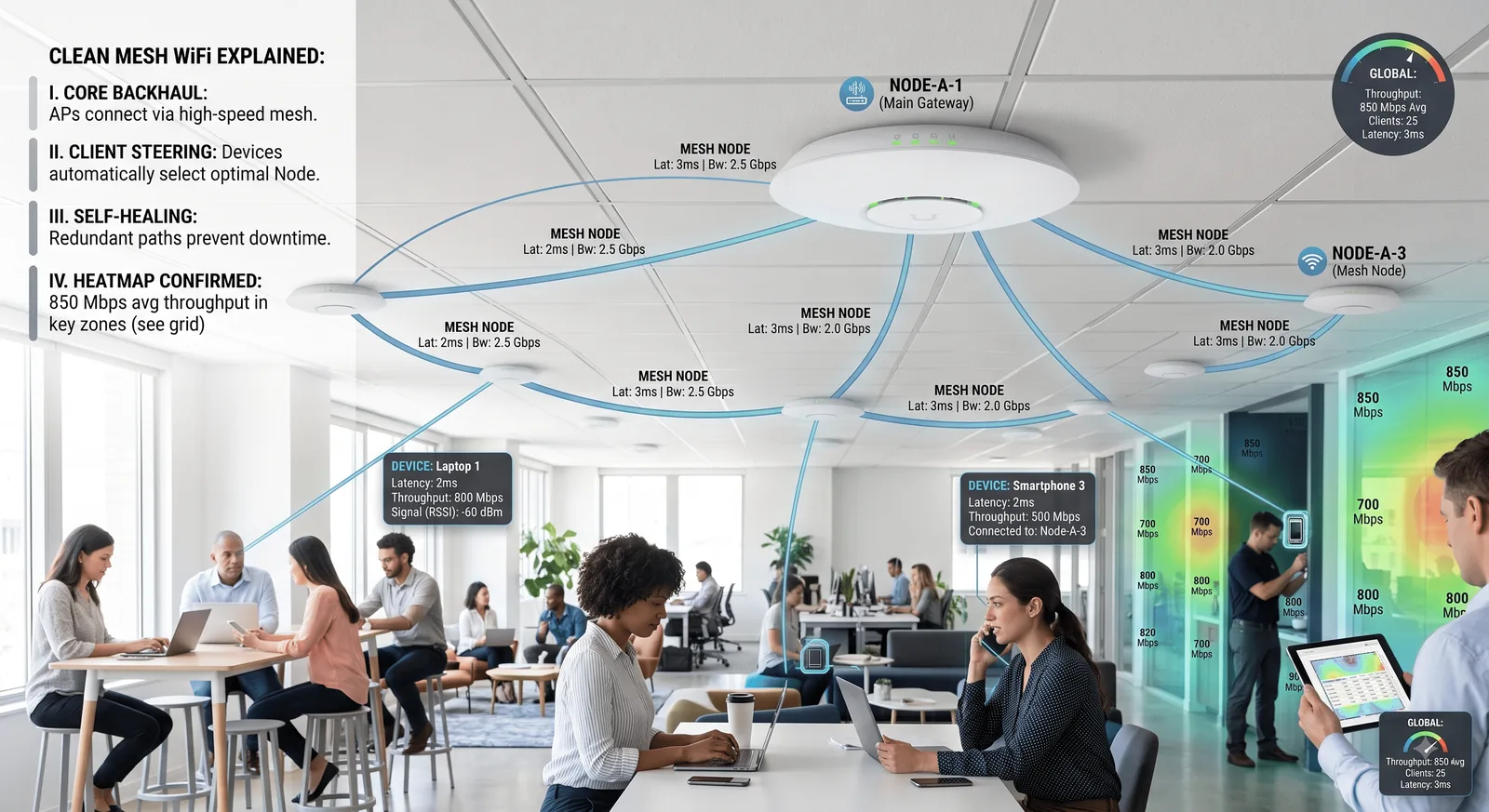
Access Point
the wireless APAn access point bridges Wi-Fi clients onto the wired LAN. It speaks 802.11 over the air, translates frames to and from Ethernet, and lets wireless devices join the same network as wired ones — the doorway between radio and cable.
An access point puts Wi-Fi devices onto the wired network by bridging radio frames to Ethernet.
How it works
bridge the two
The client associates over the air and authenticates with WPA. The AP decrypts its 802.11 frames, re-wraps them as Ethernet, and hands them to the switch — and back again the other way.
What an access point does, step by step
A device finds the SSID and joins the wireless network.
WPA2/WPA3 establishes keys so the air link is encrypted.
It converts between 802.11 (radio) and Ethernet (cable) framing.
It hands the traffic to the wired switch, joining the two networks.
In cybersecurity
The AP is the network’s wireless front door — strong encryption keeps it shut, weak config opens it to anyone in range.
Encrypt the air; never run open or legacy WEP.
An unauthorised AP is a backdoor straight onto the LAN.
A fake SSID lures clients to an attacker’s network.
Put untrusted devices on a separate SSID and VLAN.
Per-user enterprise authentication instead of one shared key.
Radio leaks past walls — tune power and placement.