NIC
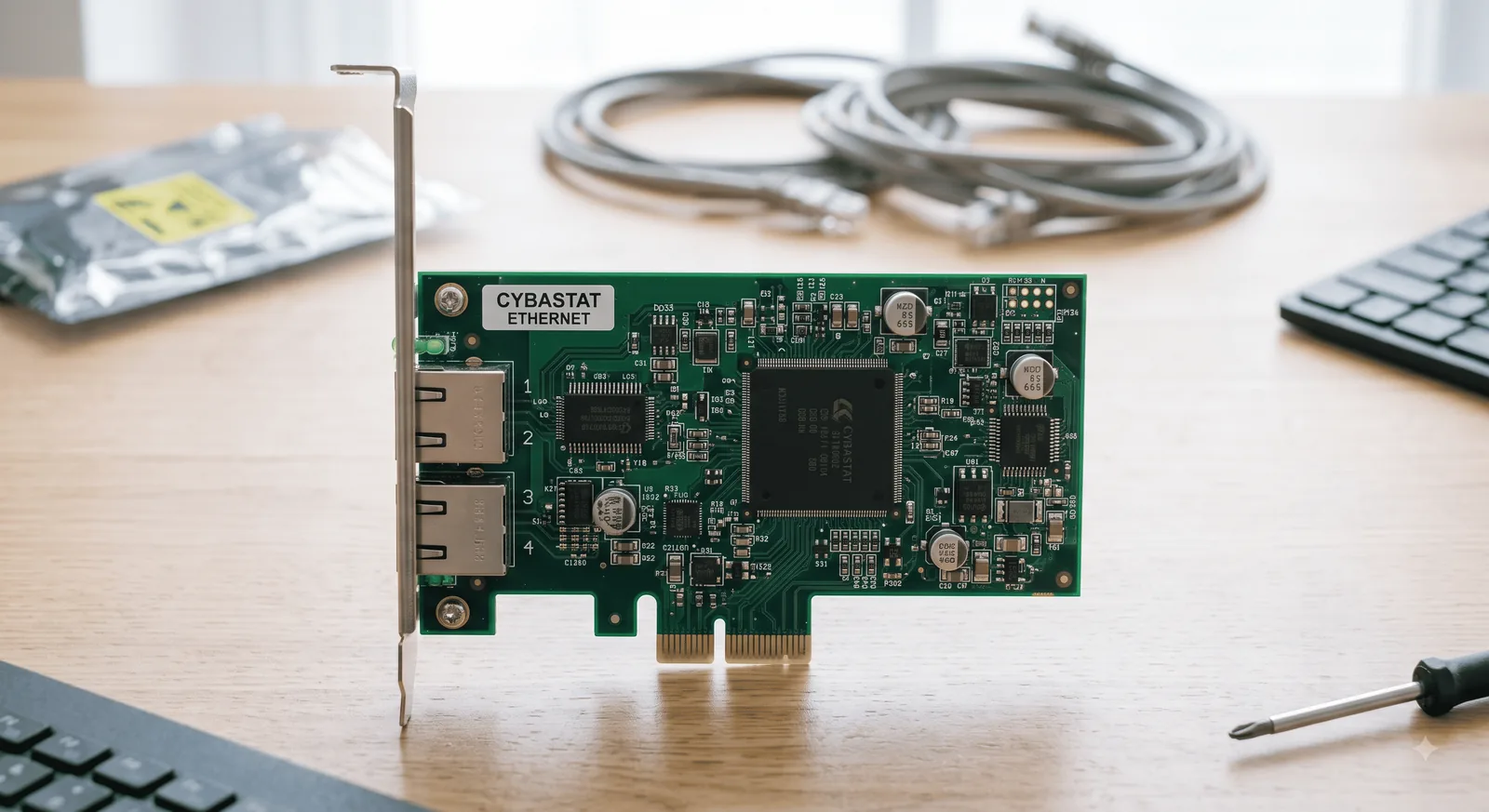
the network interface cardA NIC is the hardware that connects one computer to the network. It carries the host’s burned-in MAC address, wraps outgoing data into frames, and puts the bits onto the wire — a machine’s one physical door onto the network.
A NIC is a computer’s door onto the network, identified by its unique MAC address.
How it works
and stamps its MAC
The computer hands raw data to the NIC. The NIC wraps it in a frame stamped with its own MAC address and signals it onto the wire — and, coming back, it keeps only the frames addressed to that MAC.
What a NIC does, step by step
The operating system hands the NIC a block of data to send.
The NIC builds an Ethernet frame — destination MAC, its own MAC as the source, then the payload.
The frame is turned into electrical, optical or radio signals and put on the medium.
Incoming frames are read, and only those addressed to this MAC (or to a broadcast) go up to the OS.
In cybersecurity
The NIC is where a host meets the wire, so it’s both a hardware identity to trust — and a layer an attacker can forge or eavesdrop on.
A MAC address can be changed in software, so it proves nothing on its own.
A NIC told to keep every frame, not just its own, is how sniffing starts.
Allow-lists by MAC are a weak control — easily defeated by spoofing.
802.1X authenticates the host at the port before the NIC gets to talk.
The MAC’s first three bytes name the vendor, which leaks what the device is.
Everything a host sends or receives passes through it — a worthwhile place to monitor.