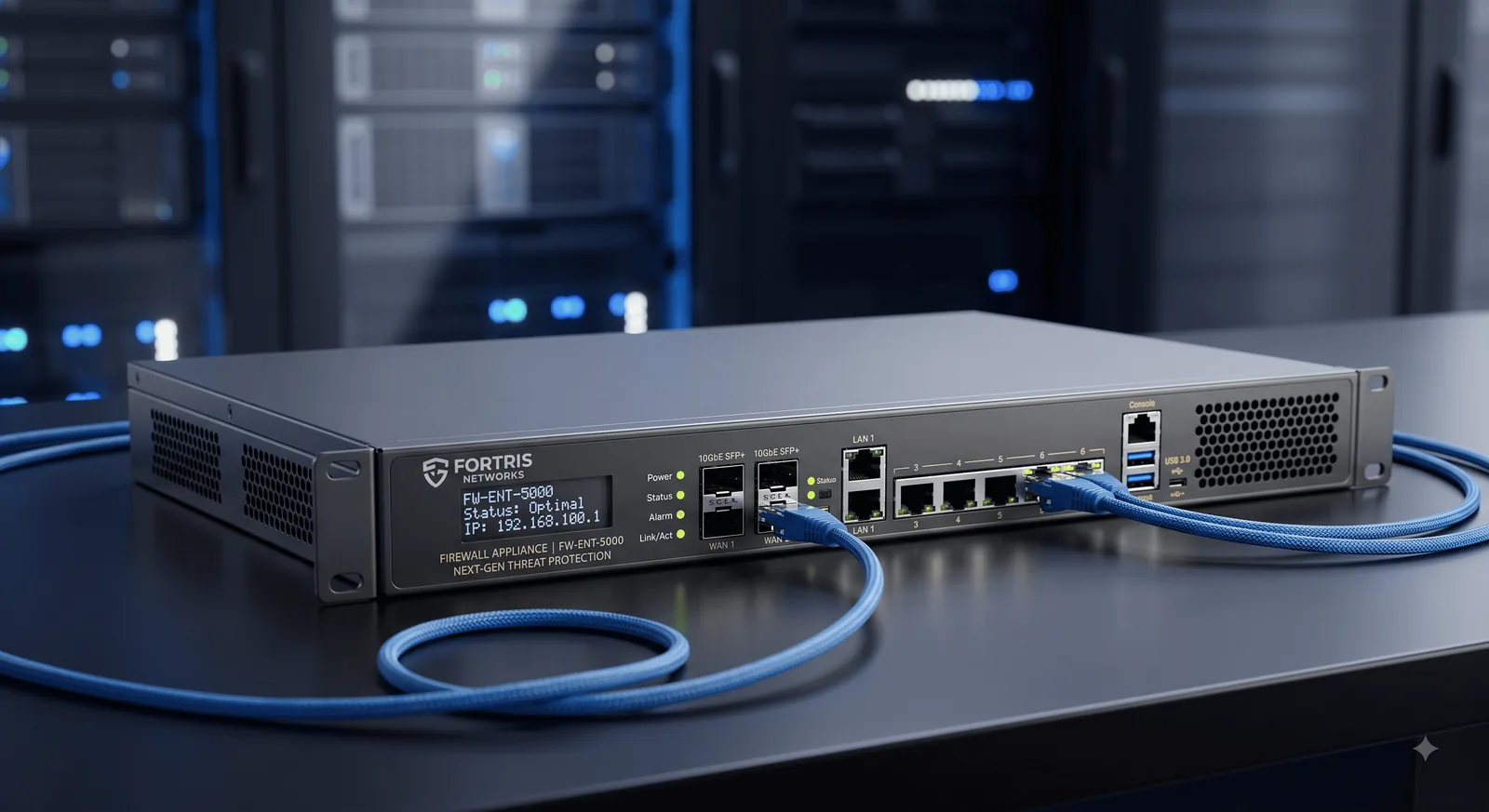
Firewall
the packet / next-gen firewallA firewall decides which traffic is allowed to pass and which is blocked. It inspects each packet against a policy, tracks the state of every connection, and drops anything not explicitly permitted — the network’s rule-keeper.
A firewall checks every packet against a policy and blocks whatever isn’t allowed.
How it works
allow or drop
The firewall checks each packet against an ordered rule set. A permitted flow passes and its state is remembered; anything not matched by an allow rule hits the final deny and is dropped.
What a firewall does, step by step
It reads addresses, ports and — on next-gen firewalls — the payload.
Rules are checked top-down; the first match wins.
It confirms the packet belongs to an already-allowed connection.
Permitted traffic passes and is logged; everything else is blocked.
In cybersecurity
The firewall is the policy boundary — it’s the network’s primary defence and a prime target to get past.
Allow only what is explicitly needed.
Track connections, not just isolated packets.
Next-gen firewalls read L7 application data.
Separate zones with rules governing what crosses.
The authoritative record of what was blocked.
Stale allow rules quietly become open holes.