RJ45 Connector
eight contacts, four pairsWhat networking calls an RJ45 plug is normally an 8P8C modular connector. Eight contacts terminate four twisted pairs, with T568A or T568B defining the pin order for Ethernet and Power over Ethernet.
A good 8P8C termination preserves pair order and pair twist right up to the contacts—appearance alone cannot prove its performance category.
Anatomy of the connector
Use the supplied plate to identify the connector, then check the four details below before selecting, terminating or mating it.
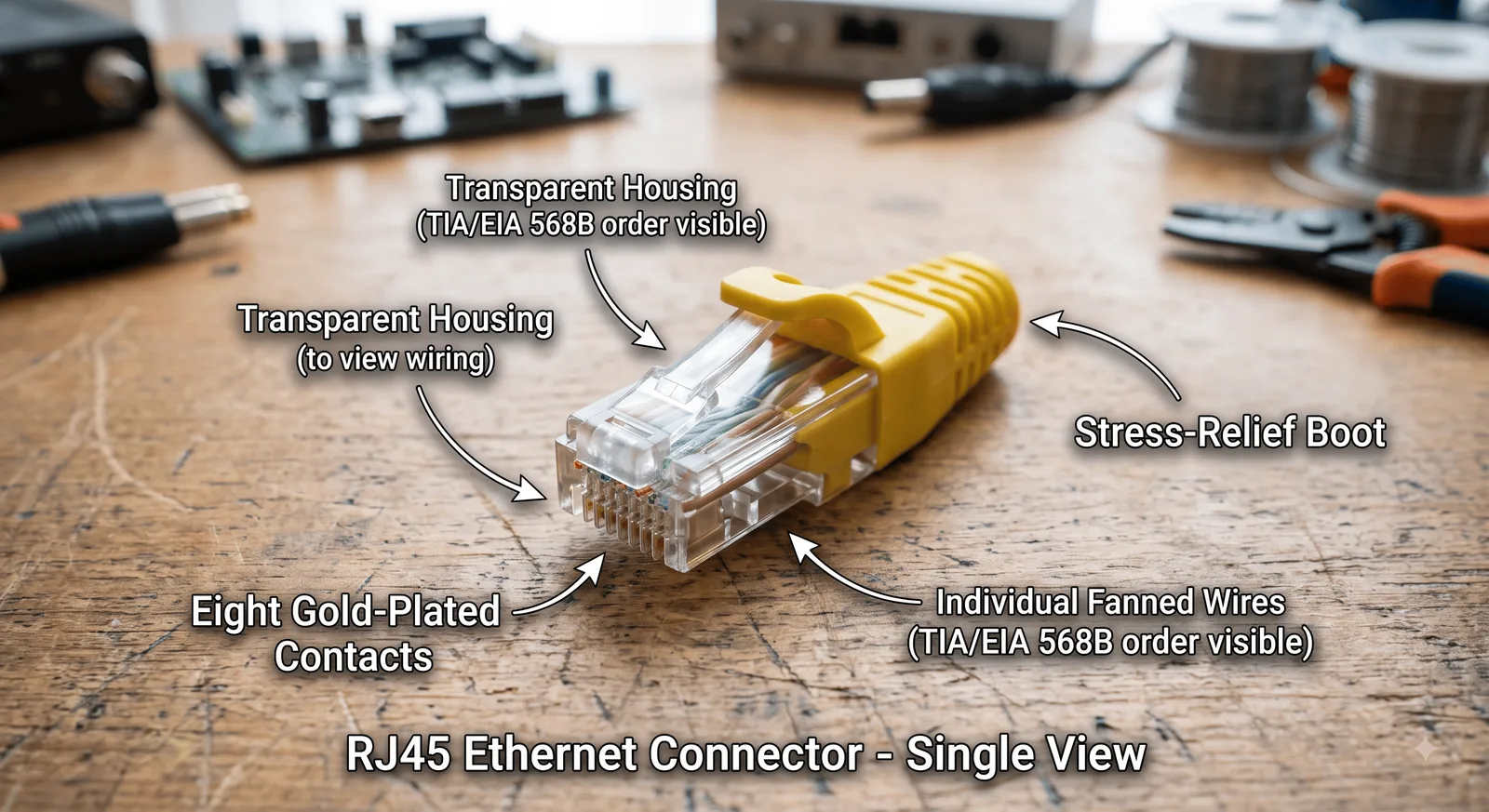
Four details to check before connection
The keyed 8P8C shell positions the contacts and fits a compatible network jack.
Eight plated contacts pierce or displace conductor insulation during crimping.
The conductors follow T568A or T568B while each original pair remains together.
The cable grip protects the termination; the latch retains the plug in the port.
Where it is used
The connector body is only one part of a link. Cable type, signal, impedance or optical polish must match the equipment on both ends.
Connects computers, switches, routers and patch panels over category copper.
Supplies access points, cameras, phones and sensors over the same channel.
Keystone jacks and patch panels provide a permanent, standards-based building link.
In cybersecurity & operations
An Ethernet jack is a direct invitation to the LAN unless access is controlled. Combine physical port ownership with network authentication.
Use 802.1X, NAC or switch port controls rather than trusting anything that plugs in.
Split pairs may pass a basic continuity test but fail under traffic or at higher speeds.
Use standards-compliant power sourcing and rated connectors to prevent overheating or damage.
Replace plugs with broken latches and protect rarely used ports from dust and debris.