RJ11 Connector
the smaller telephone plugRJ11 is the familiar narrow modular plug used on telephone leads. In everyday use the name often covers 6-position plugs with two or four contacts, carrying analogue voice or a DSL signal rather than Ethernet.
RJ11 is for telephone-style services. Its smaller body and contact count are not a substitute for an 8P8C Ethernet termination.
Anatomy of the connector
Use the supplied plate to identify the connector, then check the four details below before selecting, terminating or mating it.
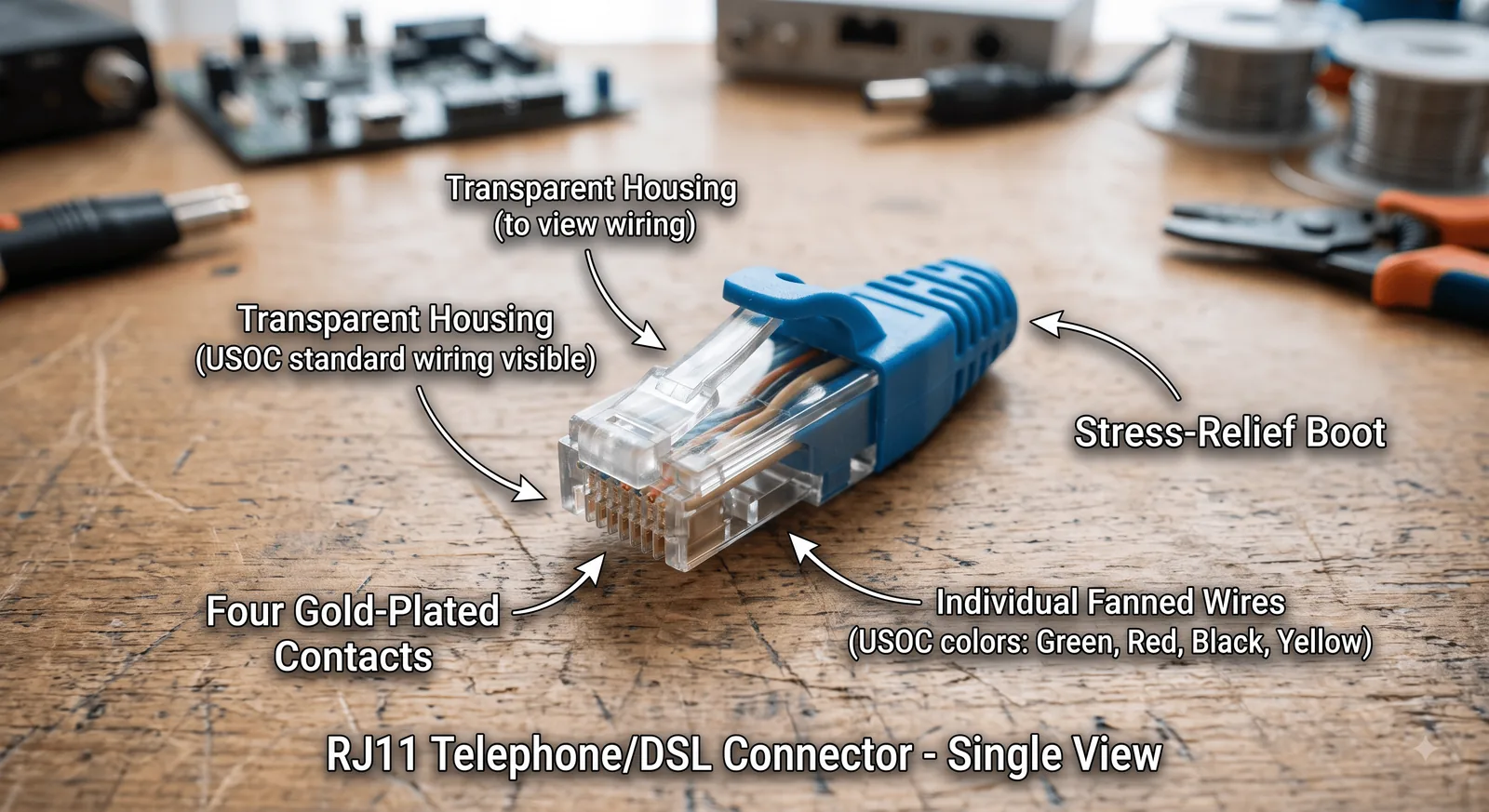
Four details to check before connection
The clear plastic shell aligns the plug in a six-position jack.
Two central contacts usually carry one telephone line; extra contacts can carry another pair.
Contact blades pierce or displace the insulation when the plug is terminated.
The spring tab holds the plug in the socket and should click without force.
Where it is used
The connector body is only one part of a link. Cable type, signal, impedance or optical polish must match the equipment on both ends.
Connects a telephone handset or base to a wall outlet.
Carries the provider copper pair between the wall, filter and DSL modem.
Some alarms, modems and low-speed devices use telephone-style modular wiring.
In cybersecurity & operations
Telephone pairs can expose conversations, dial tone or a management path. Treat accessible jacks as live physical interfaces.
Accessible copper pairs can be bridged. Secure distribution points and unused outlets.
Missing or incorrect filters can cause noise and service instability on shared voice/DSL wiring.
Do not force a telephone plug into an Ethernet port; it can bend the outer contacts.
Old telephone plant is often reused. Trace and label it before trusting the destination.