F-Type Connector
the broadband wall connectorThe F-type connector is a simple 75-ohm coax termination in which the cable’s centre conductor commonly becomes the contact pin. A threaded nut makes a secure connection for broadband and television plant.
A properly prepared compression fitting preserves the shield, dielectric spacing and weather seal that make an RG-6 channel dependable.
Anatomy of the connector
Use the supplied plate to identify the connector, then check the four details below before selecting, terminating or mating it.
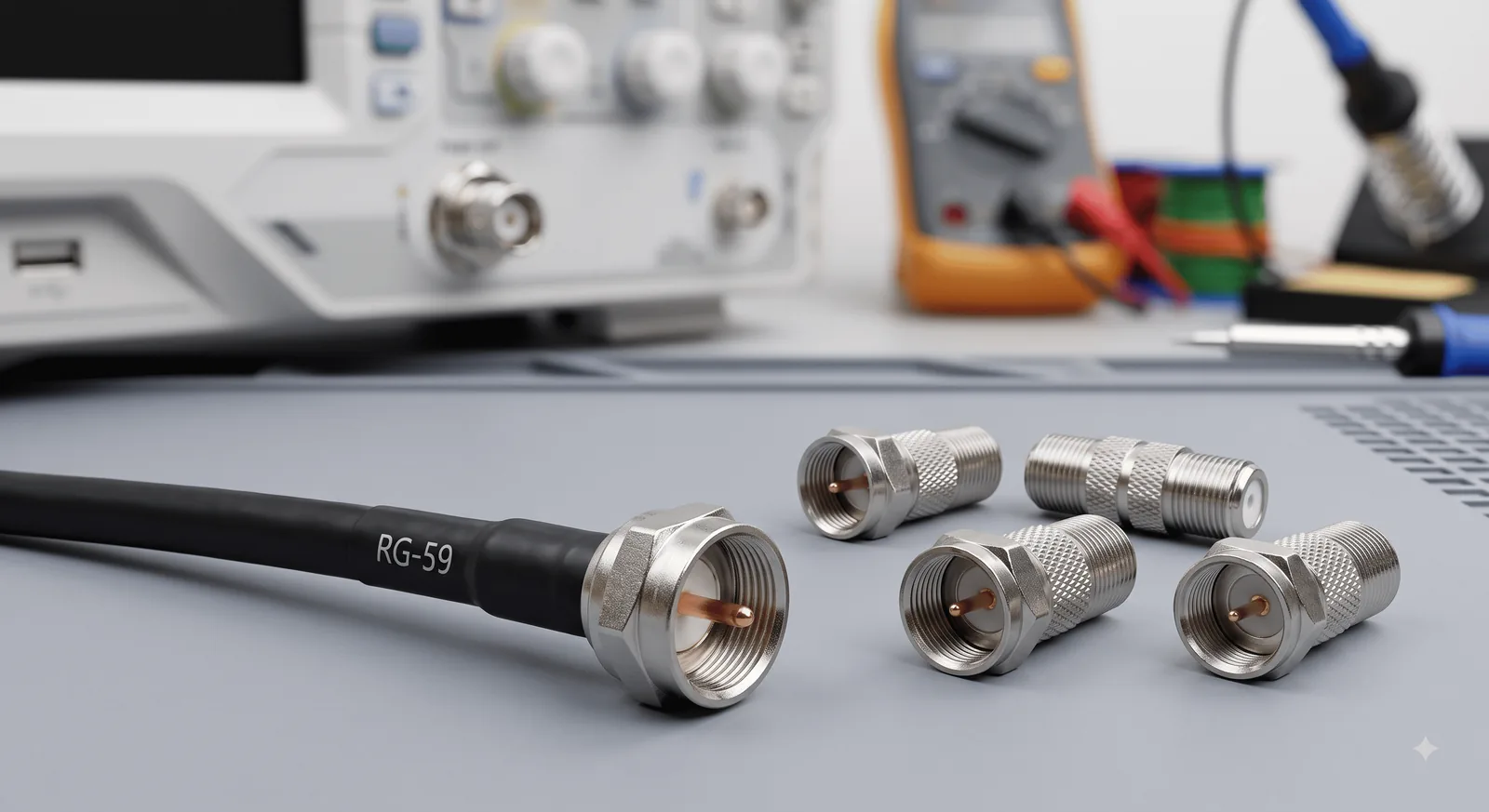
Four details to check before connection
The prepared cable conductor projects through the connector as the signal pin.
The body fits under or around the braid and continues the shield.
A tool compresses the rear sleeve into a firm, sealed cable grip.
The rotating nut secures the connector to a modem, splitter or wall plate.
Where it is used
The connector body is only one part of a link. Cable type, signal, impedance or optical polish must match the equipment on both ends.
Links provider coax, splitters and a DOCSIS modem.
Connects terrestrial, cable and satellite receivers to 75-ohm coax.
Provides a durable field connector for fixed RG-6 runs.
In cybersecurity & operations
A loose or poorly sealed F-connector lets interference enter and signal energy escape. Connector quality directly affects availability and shared plant health.
Stray braid, gaps or loose threads admit RF noise that can disrupt the local and provider network.
Damaged shielding can radiate upstream traffic and broadcast signals.
Outdoor fittings need approved boots, seals and drip management to prevent corrosion.
Every split adds loss and another accessible branch. Remove abandoned components and document the path.