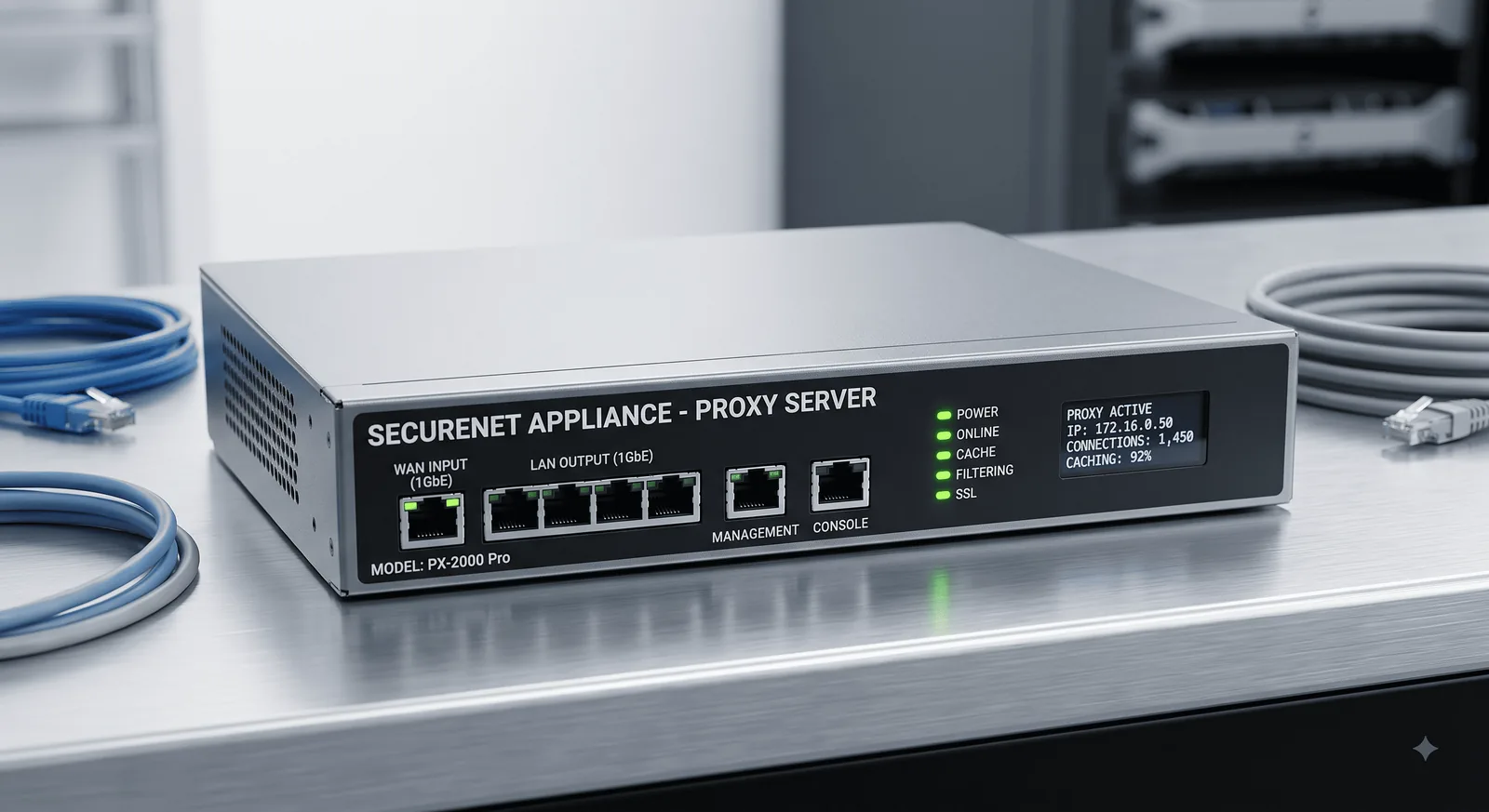
Proxy Server
the forward / reverse proxyA proxy stands in the middle of a request, speaking for one side to the other. It receives the request, caches, filters or rewrites it, and forwards it on in its own name — a broker for clients or servers.
A proxy makes requests on another’s behalf, caching and filtering what passes through.
How it works
relay
The client’s request stops at the proxy. If it can answer from cache or policy it does; otherwise it fetches from the origin in its own name, stores the result, and returns it — the two ends never speak directly.
What a proxy server does, step by step
The client sends its request to the proxy, not the origin.
It allows, blocks, authenticates or logs as configured.
It answers from cache, or fetches from the origin server.
It hands the result back in the proxy’s own name.
In cybersecurity
Because everything routes through it, a proxy is a powerful control and logging point — and a place to enforce or evade policy.
Block categories, malware and data exfiltration.
A full record of who fetched what.
A reverse proxy can decrypt and scan traffic.
A forward proxy can hide the real client.
Stale or forged cache entries are a real risk.
One place to enforce all web policy.